Friday, November 21, 2014

Toussaint Louverture


Abraham Lincoln abolished slavery in the United Stated and is widely known for this achievement. While Hitler was an effective leader, he is rightfully known for the terrible and immoral things that he has done. Great leaders are remember by their greatest achievements and the decisions that they make, some can be despised like Hitler and some can be idolized like Lincoln. All noble leaders make mistakes, like George Washington bringing his men to Valley Forge. These small mistakes are not what define them. Toussaint Louverture started as a doctor to the troops in Saint Domingue in 1791. In the midst of the slave revolt Toussaint gains the peoples trust and works up the ranks to later became the leader of the only successful slave revolt in history. With the prior guidance of Louverture, after he died in 1803, Haiti declared independence from France in 1804. Louverture, like other great leaders, had some mistakes, but these are not how he should be remembered. Toussaint Louverture should be remembered as a liberator of slaves, military commander and a Ruler of Saint Domingue.


Primarily the most important aspect that should be remembered of Toussaint Louverture was that he was a liberator of slaves. Throughout the whole revolution he always fought on the side of the salves. In 1794 under Robespierre, the revolutionary French government abolished slavery in France. Toussaint and his troops stopped their revolt and now supported the French (A). Louverture always stayed true to his aspiration of having freedom for slaves, even in that meant switching sides in a revolt. Toussaint also stood up freedom rights even in other countries. He wrote a letter to the French government once he heard that they were going to reinstate slavery. In that letter he stated “Could men who have once enjoyed the benefits of liberty look calmly while it is taken from them!” (B) and “We have known how to confront danger to our liberty, and we will know how to confront death to preserve it” (B). Louverture confronted the French government saying that they cannot take away these peoples freedom after they have already been free. He is sticking up for slaves that are not even in his country. He also threatened the French in the last statement, basically saying that he and his troops are not afraid to fight them for the French peoples independence. This shows that Toussaint Louverture was passionate for freedom for the whole world, not just people of his race or land. In 1801 Toussaint signed the Saint Domingue Constitution. In this constitution article 3 stated that “There cannot exist slaves in this territory, servitude is therein forever abolished. All men are born, live and die free and French” (C) . This article was to enforce that slavery will never be reinforced. Louverture put this in place to make sure that what he and his troops fought for will never be taken away. Under any means Toussaint Louverture always fought for the liberation of slaves.


Toussaint was also a wise ruler of his land of Saint Domingue. Although some people would not agree. In 1801 Toussaint Louverture set a Proclamation to address the fact that even though the slaves are now free they still have to work and work at the plantation they are assigned. A Lot of people either tries to leave and not work or run away to other plantations with better conditions. Louverture set this proclamation to keep the land economy afloat. The sugar production is the main source of financial support of Saint Domingue and without it the economy would crash. As the ruler, Toussaint set this proclamation to become more organized and strict about working so that Saint Domingue as a whole does not suffer. In order to keep the plantations going Toussaint placed stricter consequences for runaway workers or ‘vagabonds’. Such threats included that “Vagabond cultivators arrested . . . shall be taken to the commander of the quarter, who will have them sent to the gendarmerie [local police] on their plantation” (D). The citizens obviously did not like working on plantations because it was too similar to when they were slaves, but if they did not work then Saint Domingue would fail. These stricter laws were a smart idea on Toussaints behalf because it ensured better working numbers and outcomes. Now that people were afraid of the consequences they would work, which was beneficial to not just Saint Domingue but the rest of the world that count on its sugar imports.


In addition with liberator of slaves and a ruler Louverture was a noble military leader. In 1802 Napoleon sent 21,000 soldiers to try to reinstate slavery in Saint Domingue. Knowing this, Louverture gathered his troops and burned down the port city of Samana, where Napoleon's troops were headed. He did this because he knew that once Napoleon's troops came they would take over the city and utilize its resources and by burning it down, once they got there they would have no other resources. He then had everyone flee to the mountains and hide. Toussaint chose to have everyone in the mountains for two reasons; one, it was a good place to hide and two, his citizens knew the mountain range more than Napoleon and his troops did which brought them to an advantage. This was very wise of Toussaint to do. Although,a year earlier in 1801, Toussaint louverture did something that many consider to be quite ignorant. In 1801, Hyacinthe Moyse, Toussaint adopted nephew, believed that Toussaint was wrong to support plantation farming. Hyacinthe then organized a rebellion against Toussaint policies in agriculture. On the night of the rebellion in October of 1801 many whites were massacred. The war cry of the rebels of Hyacinthe Moyse was “General Moyse is with us- death to all whites” (E). Toussaint was raged when he heard this news and had some of the men summoned. He then had a firing squad kill the rebels. He had his nephew arrested and had him confined and then had him “brought before a firing squad, Moyse himself gave the order to fire”(E). The measures Toussaint took after the rebellion were very extreme. It is horrific that he would have his own nephew arrested and killed for his rebellion but this event should not override all of the good that Toussaint has done. Aside from this Toussaint Louverture was a very respectful military leader.


Although Toussaint Louverture did have some immoral actions he was still a noble man and should be remembered as one. Toussaint Louverture should be remembered primarily as a liberator of slaves, but also as a great ruler and military leader. Toussaint has proved himself through his actions and words that he is both knowledgeable and is not afraid to stand up for what he believes in. Toussaint Louverture achieved great things and has affected history. His legacy should never be forgotten.


Sources:

Document A - Timeline created from various sources 

Document B - Toussaint Louverture, "Letter to the French Directory, November 1797"

Document C - The Saint Domingue Constitution of 1801. Signed by Toussaint Louverture in July 1801.

Document D- Toussaint Louverture, "Proclamation, 25 November 1801." 

Document E - Madison Smartt Bell, Toussaint Louverture: A Biography, 2007

Documents F - William Wells Brown, "A Description of Toussaint Louverture," from The Black Man, His Antecendents, His Genius, and His Achievements, 2nd edition, 1863. Engraving of Toussaint Louverture, 1802. 

Tuesday, November 11, 2014

Not All Failures

Some historians say that the revolutions of 1830 and 1848 were a failure but were they really? That was the essential question of the day. To learn the information needed to answer this question we split into groups with each group assigned one revolution. We read many sources and learned about our revolutions and then made a SurveyMonkey. A SurveyMonkey is an online survey that you can create and it shows the submitted answers of the class on various pie charts. Each group would make a survey and one at a time the other groups would answer each of the other groups survey after reading their documents. After each groups survey was taken by the rest of the class they would go over the answers and important pieces of information. This way we were able to learn about the revolutions of 1830 and 1848 without taking up too much time.

My group had the revolution of Hungary in 1848. The Hungarian movement began in Vienna were the whole idea was to spur nationalism but people also wanted some liberal reforms from the Austrian Monarchy. Metternich, who was in power of the Austrian monarchy, was conservative and also not willing to recognize Hungarian national independence. Naturally, the Hungarian people wanted him out of power. In source number 1 it states "Metternich, who had dominated Austrian politics for more than 30 years, tried to silence the students who took to the streets. But when workers supported the students, Metternich resigned and fled in disguise. The Austrian emperor then promised reform." So eventually the people got their wish and Metternich was out of power. There was a big meeting held to decide about the government and this was called the Diet. All in all the revolution as a whole was a partial failure; all of the Hungarian rebels were eventually killed or imprisoned by Austria with the help of Russia. But the people were able to get Metternich out of power. I think that the class really learned from our SurveyMonkey.


screen- shot of the results from the  Hungarian SurveyMonkey 


As you can see from the screen shots most if not all the students got the right answers.


Overall I do not think that the revolutions of 1830 and 1848 were huge failures, except for Decembrist. Some revolutions, while having many down sides, did get some things accomplished. For example, even though in the end mostly all the Hungarian rebels were killed or imprisoned they still got Metternich out of power. In the Frankfurt Assembly in 1848 the people wanted all states to be under one constitutional monarchy, the Frankfort Assembly was held to decide if they should have a constitutional monarchy or not. The people asked the Prussian king Friedrich Wilhelm to become their king, but he declined. While what they set out to do was not successful they did have good attempts of trying to succeed and in the end it was not a big tragedy. The one revolution that is safe to say was a complete failure was Decembrist. The people did not want Nicholas, the son of Alexandar, to rule because he was very strict and unprepared. There were revolts because people wanted to end serfdom as well but in the end nothing changed and the rule stayed the same, not to mention that a lot of people died in the effort of the revolt. But overall there were some mild stone achievements in these revolutions that made them not as much as a failure as historians set them up to be. 

Sunday, November 2, 2014

Balancing in Vienna


What should people in power do when their power is threatened? This is a broad question but to try to answer it we looked at some examples of this problem. In class we learned about Klemens von Metternich and his relationship with Napoleon. We watched a clip of a movie where Metternich and Napoleon had a meeting were Metternich was seeking peace with Napoleon in Dresden. Then as a class we discussed the Congress of Vienna and viewed a interactive map of the changes in Europe and the land boundaries of that time. By the end of the class, after looking at all these activities, we had a good idea on what people do to protect their power.


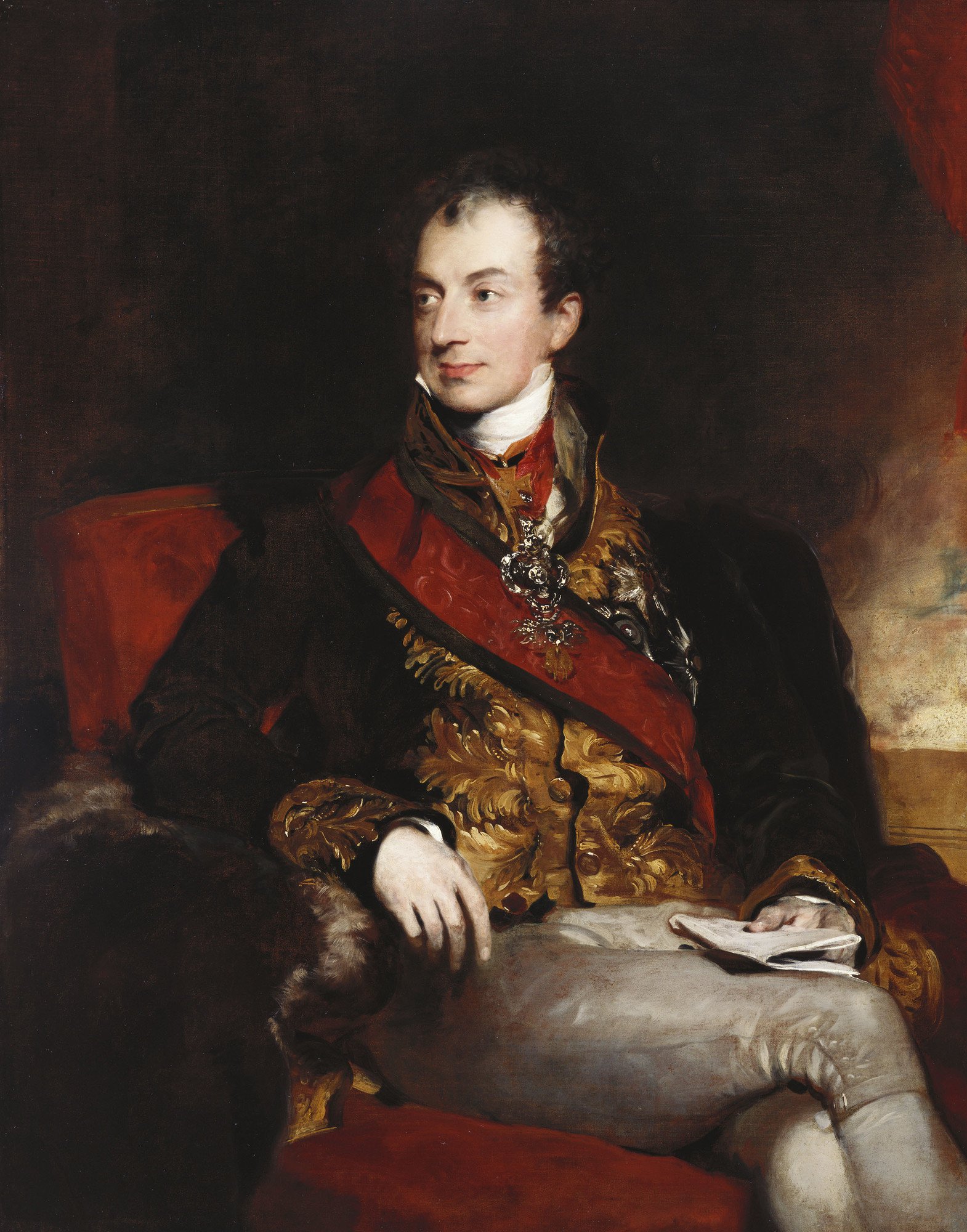
Klemens von Metternich  source- http://upload.wikimedia.org/wikipedia/commons/4/49/Prince_Metternich_by_Lawrence.jpeg


When powerful people feel like their power is being threatened they will first fight to keep their power, and then create a balance of power that so no one will try to take over and threaten their own power again. As we learned from our sources in class, Metternich, who is an official from Austria, power is being threatened by Napoleons conquests. Other big powers in Europe such as Prussia and Russia, were feeling threatened as well. Surrounding countries held The Congress of Vienna to try to make peace. After a long battle Napoleon was finally exiled to Elba then Saint Helena. The Congress then decided to balance their power between themselves. This was to prevent anyone from taking over land like Napoleon had and causing chaos. Also, as seen in the interactive map, the congress divided land among the four big powers, Austria, Prussia, France, and Russia, and made new boarders for these countries. The government officials were happy with these new changes and some order was restored after the Congress of Vienna.

I believe it was the right choice of the congress to exile Napoleon. He was causing too much chaos and nations were being torn apart. I also think that balancing power between them was a very smart thing to do. This way it was insured that no country would try and take over the other and cause more wars. I think that The Congress could have taken the poor into consideration more. The changes they made only helped the power as a whole and not specifically the people in need. People in power should be willing to sacrifice some of their power under certain circumstances if it is better for the people and society.

Thursday, October 23, 2014

Ideas of Ideology


What were the major political ideologies of the 19th century and how did they influenced social and political action was the essential question of the day. Ideologies is a system of ideas and ideals that forms the basis of economic or political theory and policy. To answer the essential question we had to first know what the major ideologies of the 19th century were which are liberalism, conservatism, and nationalism. In groups we then discussed what these terms mean in the modern day so we could later on compare them to what they meant in the 19th century. Groups were then formed to focus on a specific ideology and make a one minute project on the topic. My groups’ ideology was liberalism. Each group had a source to read containing clues about their ideology and used that source to come up with the definition of the ideology during the 19th century. We had freedom on how we did our project, as long as it was one minute and described the ideology then we could do whatever we wanted.


A screen shot of my video project with John Locke speaking.

 
For my groups presentation we decided to use the Chatter pixs app. This app that lets you upload a picture, draw in a mouth, speak into it, and it makes it look like the picture is talking. In our video we had a picture of John Locke, who was a founding father of liberalism, explain what liberalism was in the 19th century using the information we read in our source. Liberalism back in the 19th century was the belief that the middle class should have a say in what the king does; that the people have god given natural rights and that the government should respect all rights, excluding women and the poor. This idea influenced philosophers of that time who started to write about liberalism. The middle class really liked this idea and it later lead to a revolt.

The other ideologies were conservatism and nationalism. Conservatives wanted to reserve traditional and political structures against revolution because revolutions always resulted in chaos. Conservatism also had set social classes and a monarchy. Nationalists wanted unification of all common German principalities with common culture, language and history. This way each nation could be more connected. The belief of nationalism motivated people to be the best nation they can be and fight out foreign rulers. Each of the three ideologies were very different and each group thought they had the best idea but the over all goal of each was to do what's best for the people.

Wednesday, October 15, 2014

Napoleon Bonaparte - Good or Evil?


The essential question of the day was “What was Napoleon Bonaparte impact on the social, economic and political systems of Europe? Were they positive or negative impacts?” In class, to find the answer we looked at all the places that he has conquered and many documents on Napoleon. The documents were mostly individual’s opinions on Napoleon and his works.

 
Napoleon Bonaparte  source- http://jcvalda.files.wordpress.com/2013/04/napoleon-bonaparte-02.jpg


People’s view of Napoleon varied greatly. One of these individuals was Madame de Staёl. Madame had some snide comments on Napoleon such as “He would like to persuade men by force and by cunning, and he considers all else to be stupidity or folly...” She did not have a high opinion on Napoleon because she was once a high class citizen but when Napoleon took over, her social status went down. Just because she had a bad experience doesn’t mean it was bad for the rest of society. Napoleons impact on society was a positive one to most; he abolished serfdom in much of Europe. If you were born poor you could become rich, which was a great thing for the lower classes of people. Another individual we read about was Marshal Michel Ney. Unlike Madame de Staёl, Ney had a positive outlook on Napoleon, saying “Now I would escort you to join this immortal legion which the Emperor Napoleon conducts...” Marshal Michel Ney was an officer who served with Napoleon so he believed that Napoleon was doing a great job politically. Overall the political impact was good for France but bad for the places he conquered. He was building a great French empire but naturally the places being conquered did not like being conquered; but they did like the Napoleonic code because they could keep their own rules but with a new code. Economically it was beneficial to everyone because trade boosted throughout his conquered lands in Europe. As stated in “The Lost Voices of Napoleon”, “it must be confessed, with a certain degree of truth -- as a usurper, a tyrant, and a greedy, egotistical and ambitious ruler, it has also been found impossible to deny that his work, such as it was, was accomplished with an exquisite efficiency almost amounting to perfection." Napoleon was very talented in what he did and with all his skills his main goal was to help the well being of the land.


I believe that Napoleon did mostly good than evil during his reign. Political, social and economic systems of Europe were greatly impacted in a positive way. By reading these multiple sources I got a better understanding of how Napoleon affected others. I found these sources to be very interesting and diverse; but with the overall message that he did do well for Europe. 

Wednesday, October 8, 2014

No More Chocolate


Today in class we played rock paper scissors. But it was not as simple as it sounds. Everyone started off with two Hersey kisses, but two kids in the class started off with eight. We all stood up and faced each other in rock paper scissors and who ever won the round got a Hersey kiss from the loser. With this freedom of competition some won and some lost which is a lot like capitalism. For me this game lasted a very short time, considering that I lost the first two rounds so I was disqualified and sat down chocolate-less and watched everyone else play. The two kids in my class who started off with 8 Hersey kisses naturally lasted the longest in the game and ended with the most amount of kisses. The game seemed fun in the beginning but then it got really frustrating.  I still wanted my two Hersey kisses back. I got really jealous watching the people who started out with more kisses keep on winning. I experienced frustration similar to the poor people's frustration in capitalism. Some kids that started off with two made their way up the ranks and collected more chocolate by the end. Watching that was frustrating too because I wanted to keep playing and I wanted more chocolate but I had to sit and watch everyone else become richer in chocolaty goods. Then the teacher collected all of the chocolate and redistributed it equally, like socialism. After that we all chose not to play anymore and each keeps two chocolates and no longer needed the teachers’ supervision, like communism. In class we discussed the relationship between this activity and capitalism, socialism, and communism. We discussed Marx's theory of communism and Smith's theory of the invisible hand. 

Karl Marx
 source - http://sidvents.files.wordpress.com/2013/04/carl-marx.jpg?w=600


Karl Marx wanted to help the poor and had a theory on how the government would change and eventually help the poor prosper with communism. Marx's theory of communism first starts with capitalism. Private owners of industries and freedom of competition would results in unequal economic classes so there would be a class struggle and the lower class workers would revolt. This is what leads to Socialism next in Marx's theory, the government owns industries and the goal is to bring economic equality and aim a classes society. Marx said that the government would no longer be needed because people would be more willing to share which would create Communism. Communism is the goal of a classes society with no government needed and having everyone equal, which Marx thinks is the best way to help the poor. Adam Smith, who wrote Wealth of Nations thinks differently. Smith thinks that the best way to help the poor is by the use of the invisible hand in capitalism. The invisible hand is when people buy and sell on their own and have competitions between businesses, which means the harder you work, potentially the more money you make. Unlike Communism, with the invisible hand you do not need to share your wealth. Smith said that with the invisible hand the government would not need to regulate the economy because the economy would regulate itself. This is because people who work are also consumers and will consume and buy things. As you can see Marx and Smith had a very different outlook, but both had the same goal in mind; to help the poor.


In my opinion Smiths' is the best theory. The invisible hand would work better than communism. In communism if everyone is equal and gets paid the same amount then there is no real motivation to work harder. If there is no motivation and no one works harder and tries to learn more then the society would go downhill. With some competition between businesses people are determined to work and do research to make their product better. That way there will be advancements in technology and overall it is close to a fair playing field; the harder you work the more money you earn.

Sunday, October 5, 2014

Motivation to Determination

In the start of the Industrial Revolution most girls were very motivated to go and work in Lowell. It was exciting to get away from farm life and go into the city. Young girls wanted to experience city life and meet new people. They would be able to make their own money and buy things they wanted. It was also beneficial to the families as well. The girls would send some of their pay back to their families on the farm. Girls were motivated to work in Lowell also because it gave them a sense of independence. Even though they had a strict work ethic and schedule they still had their own independence outside of the mills.  Being away from their families and out on their own was very appealing to them.


Although there were benefits there were also some costs as well. Aside from the girls leaving their comfort zone the work in the mills was very dangerous and loud. Lots of people got injured or even killed. Many got sick or lost their hearing and had many other health issues. It was very easy to get in trouble while working. A lot of the overseers were rude and strict and if they thought you weren't doing your work fast enough or good enough you could get in trouble or even beat. Working in the mills too long could even damage your reputation; that would mean that you are old and no man would want to marry you.


Women were not taken as seriously as men during this time. Factory owners started to lower wages and increase productions thinking that the girls would not say anything about it but they would not stand for it. The girls help a protest against the factories and many observers and owners were surprised by this. These girls were determined to stand up for themselves and not go to work but they quickly got replaced by other girls from the county side. Two years later another strike happened against the rise in boarding prices and this time with better organization and stronger relationships between the girls the owners were defeated and had to accommodate the girls wants. These protest seemed very 'unladylike' but the girls defended themselves saying that the factory owners 'enslaved' them and that they had independence and could stand up for themselves because they were "the daughters of free men". These actions set the road for future feminists and gender equality.